From Fleece to Yarn: A Gentle Introduction to Small-Scale Wool
Wool has a reputation problem. The scratchy sweater from childhood, the itchy blanket at the back of the cupboard—these memories stick. But wool is also one of the most remarkable fibers on earth: warm when wet, naturally odor-resistant, biodegradable, and, when it comes from well-managed flocks, part of a farming system that can regenerate grassland rather than degrade it. Understanding where wool comes from changes how you value it.
The journey begins with the sheep. Different breeds produce dramatically different fleeces. Merino is fine and soft, ideal for next-to-skin garments. Romney and Corriedale are sturdier, better for outerwear and rugs. Some breeds, like Shetland, produce fleeces that vary in texture across the body, which spinners prize for their character. A fleece is shorn once a year, usually in spring, and a single fleece can weigh anywhere from two to fifteen pounds.
Skirting, Washing, and Preparing the Fiber
Raw fleece is not ready to spin the moment it leaves the sheep. It arrives full of lanolin, vegetable matter, and—let's be honest—a certain farmyard aroma. The first step is skirting: spreading the fleece out and pulling away the dirty, matted edges. What remains is washed gently in hot water with a mild detergent, taking care never to agitate it, or the fibers will felt into a solid mass.
Once dry, the wool can be carded—brushed into fluffy clouds called rolags—or combed into smoother strips called top. Hand carders and drum carders both work; many beginners start with a pair of hand cards and a lot of patience. This preparation stage is where you begin to understand the fiber's personality. Is it crimpy and springy? Long and sleek? Each quality will shape how it spins and how the finished yarn behaves.
Spinning, Plying, and the Value of Slow Yarn
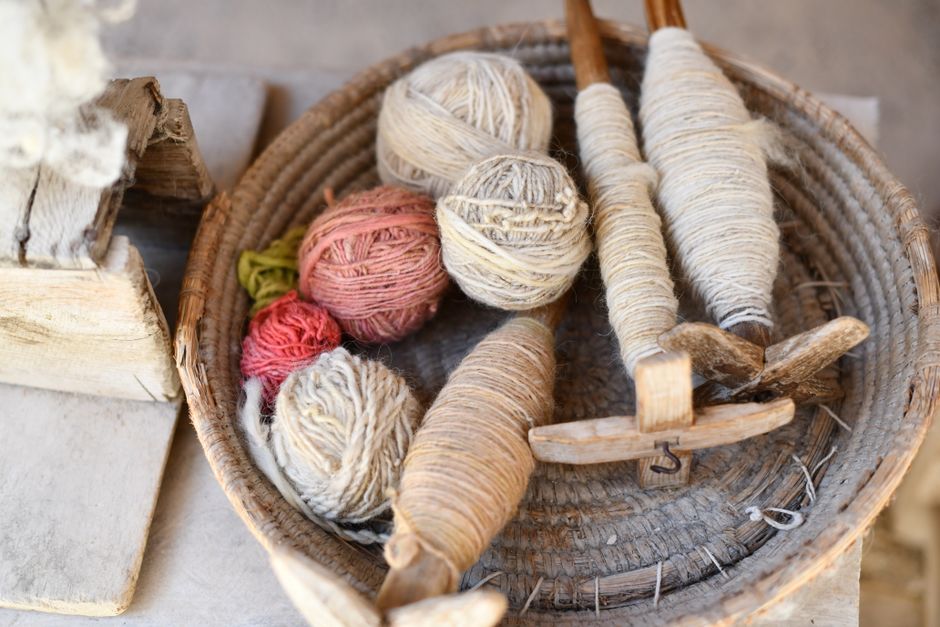
Spinning turns loose fiber into yarn by twisting it. A drop spindle costs very little and can be learned in an afternoon; a spinning wheel is faster but demands more practice. Either way, the spinner controls thickness, twist, and texture in a way no factory can replicate. Plying—twisting two or more strands together—adds strength and balance.
The result is yarn with a story: this fleece, this farm, this season. It is rarely cheap, and it shouldn't be. Small-scale wool supports shepherds, keeps rare breeds viable, and produces textiles that can be repaired and composted rather than discarded. You don't have to spin your own to support this world—buying yarn from a local mill or a named farm is enough. But once you've seen a fleece become a skein, you never look at a sweater the same way again.