The Quiet Power of Mending: Why Visible Repair Is Changing How We Dress
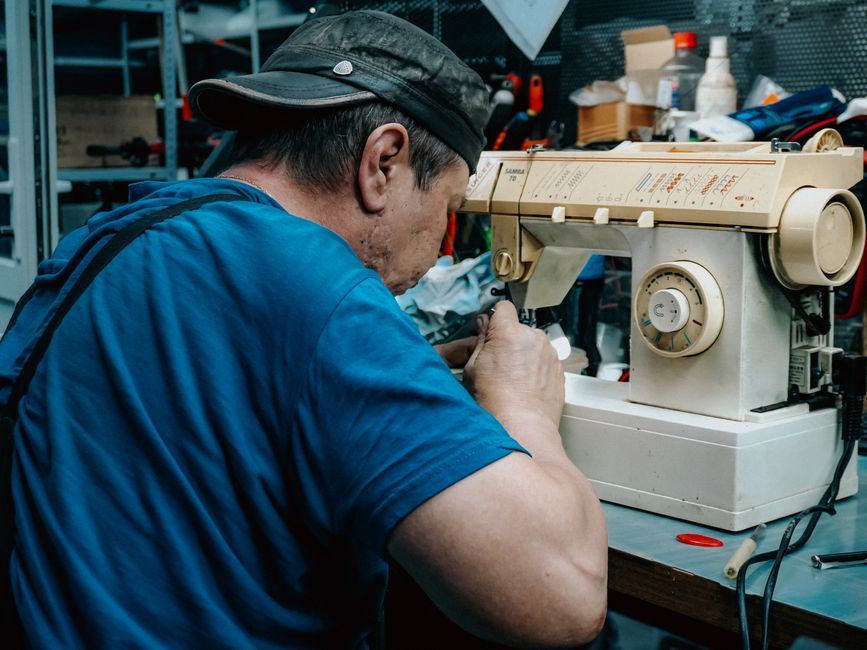
There's a moment every mender knows: you're sitting with a torn seam or a worn elbow, needle in hand, and you realize you're not just fixing a garment—you're extending a relationship. That sweater you've worn through three winters, the jeans that finally molded to your shape, the linen shirt that softened with every wash. Mending is how we tell those clothes we're not done yet.
For decades, repair was something people did out of necessity, then out of thrift, and somewhere along the way it became something to hide. A patch was a sign of scarcity. A darned sock meant you couldn't afford new ones. But the tide has turned. Visible mending—bright sashiko stitches, contrasting patches, embroidered repairs—has moved from kitchen tables to runway-adjacent street style, and the reasons go deeper than aesthetics.
When you mend a garment, you slow down. You touch the fabric, learn its weave, notice where it's wearing thin before it tears. You start to understand clothing as something made rather than bought. That shift in attention is the same one that leads people toward natural fibers, toward knowing who sewed their clothes, toward buying less and choosing better. Mending is often the doorway into a slower, more thoughtful wardrobe.
Why Repair Skills Matter More Than Ever
Fast fashion trained us to treat clothes as consumables. A seam splits, a button falls, and the whole thing lands in a donation bag or a landfill. But the skills to fix these things are simple—a basic running stitch, a backstitch, a way to reattach a button—and they take an afternoon to learn. What's harder to relearn is the mindset that says a garment is worth the effort.
There's also a practical layer here. Textile production is resource-intensive, from water and land use to the chemicals involved in dyeing and finishing. Every garment you keep in rotation for another year is a garment that doesn't need to be replaced, and that math adds up quietly over a lifetime. Mending isn't about guilt; it's about noticing what you already own and deciding it's worth caring for.
And then there's the strange, satisfying joy of it. A repair is a record. That patch on your knee is from the summer you learned to skate. The stitch along your cuff is the night you sat with a friend and talked until midnight. Clothes carry memory, and mending makes that memory visible.
How to Start Without Overthinking It
You don't need a sewing machine or a drawer of specialized tools. A small kit—needles, thread in a few neutral colors, a thimble, sharp scissors, and maybe a bit of scrap fabric—will carry you through most repairs. Start with something low-stakes: a loose button, a hem that's come undone, a small hole in a t-shirt. Look up a single technique at a time rather than trying to learn everything at once.
Sashiko, the Japanese running-stitch tradition, is a wonderful entry point because it's forgiving and decorative by design. A simple woven patch over a worn knee can be done in an evening. And if your first repair looks messy, that's fine—mending is a skill, and skills improve with use.
The point isn't perfection. The point is keeping your clothes in play, learning your own hands, and quietly refusing the idea that things are meant to be thrown away. One stitch at a time, that refusal adds up.